How a unique convergence of deep maritime operational research and advanced software engineering earned the European Union’s “Good Practice Example” designation and what it means for our long-term vision.
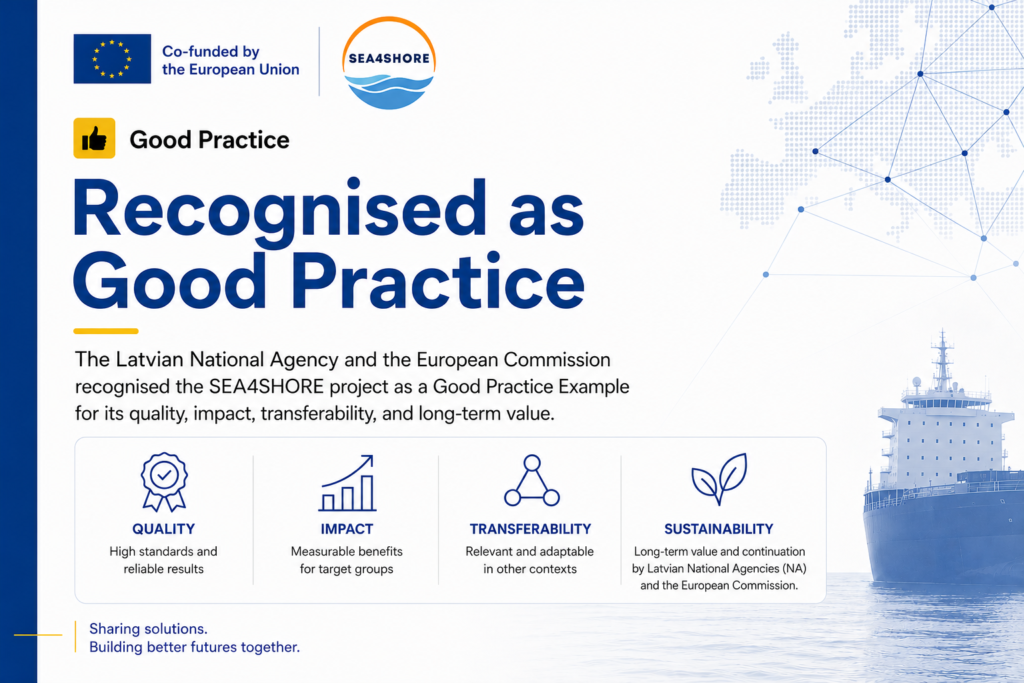
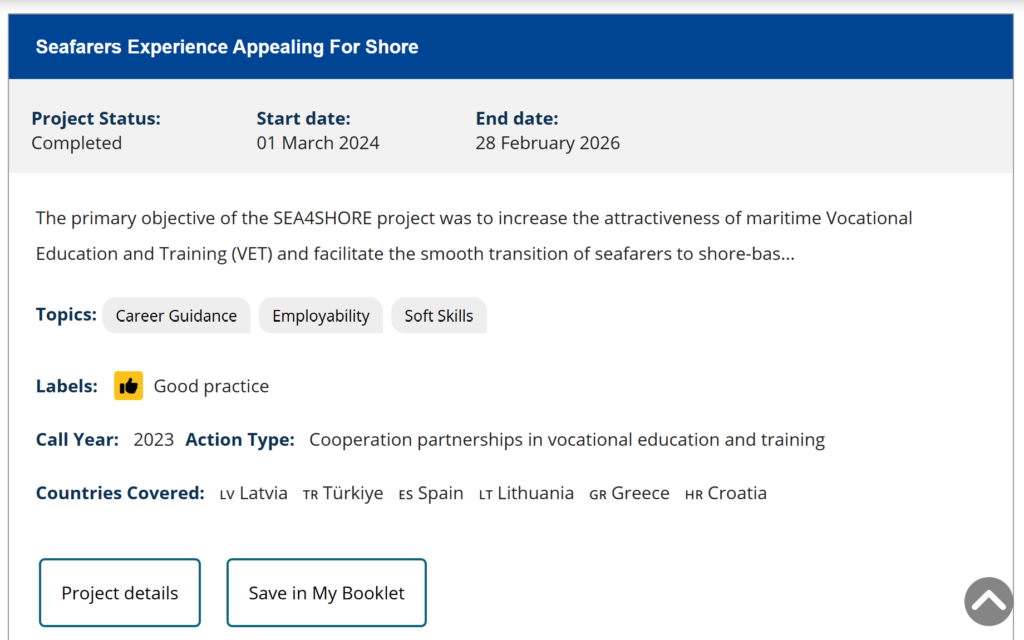
For modern shipping, the true measure of innovation lies not just in optimizing hull designs or deploying alternative fuels, but in safeguarding the human capital that drives the global supply chain. Reflecting this core philosophy, the European Union’s Erasmus+ project SEA4SHORE (“Seafarers Experience Appealing For Shore”) has officially concluded its final evaluation by the State Education Development Agency (VIAA). The final report achieved an exceptional qualitative score of 93 out of 100 points, formally securing the European Commission’s prestigious “Good Practice Example” status.
As a core partner within the six-nation European consortium, MARITIME INNOVATORS spearheaded the technical and structural engineering of the project’s digital core. By blending institutional maritime expertise with substantial investments in advanced IT architecture, we transformed complex competency frameworks into a functional, open-access self-assessment engine. This success serves as a powerful validation of our long-term mission: building the scalable digital infrastructure required to support workforce mobility, digital education, and operational excellence across the global Blue Economy.
Pioneering the Digital Maritime Horizon: Our Vision and Mission
At MARITIME INNOVATORS, our founding premise has always been that the maritime industry’s traditional silos specifically the division between shipboard operations and onshore corporate management, stifle long-term growth and seafarer retention. Our mission is to dismantle these barriers by transforming real-world seafaring experience into adaptive digital learning tools, targeted research, and cross-border career frameworks.
The successful completion of the SEA4SHORE project directly advances this corporate vision. The modern seafaring workforce faces shortening average tenures at sea, frequently transitioning to land-based employment within five years. If left unmanaged, this migration results in a severe drain of critical operational knowledge from the maritime ecosystem. Conversely, shore-based employers face acute shortages of technical talent capable of navigating the realities of modern vessel operations. Our focus is to engineer the digital conduits that turn this talent migration into a highly organized, efficient asset for shipowners, ports, and logistics providers.
The Core Mismatch: Translating STCW into Corporate Competence
For decades, when a senior officer or technical engineer stepped off the gangway to seek a land-based position, they entered an unoptimized human resource landscape. Standard corporate recruitment platforms operate on linear educational frameworks and regional qualifications. They lack the structural capability to decode the high-stakes, multi-disciplinary competencies mandated by the International Maritime Organization’s STCW Convention.
A Chief Engineer’s deep understanding of complex thermodynamic systems, safety management protocols, and resource management cannot be easily parsed by an automated keyword scanner used by onshore corporate HR departments. This disconnect creates a double penalty: transitioning seafarers face professional underutilization, while shore-based organizations miss out on the sea-proven leadership necessary to run highly technical fleet management and smart port operations.
Our Unique Strategic Advantage: Where Maritime DNA Meets IT Infrastructure
What sets MARITIME INNOVATORS apart in the global maritime technology landscape is our deliberate, long-term investment in two distinct domains: maritime operational research and in-house software development capacity.
Many software firms attempting to build maritime solutions lack a fundamental understanding of the industry’s strict regulatory boundaries, nomenclature, and human element. Conversely, traditional maritime training academies frequently lack the agile technical resources to build, scale, and maintain high-performance digital ecosystems.
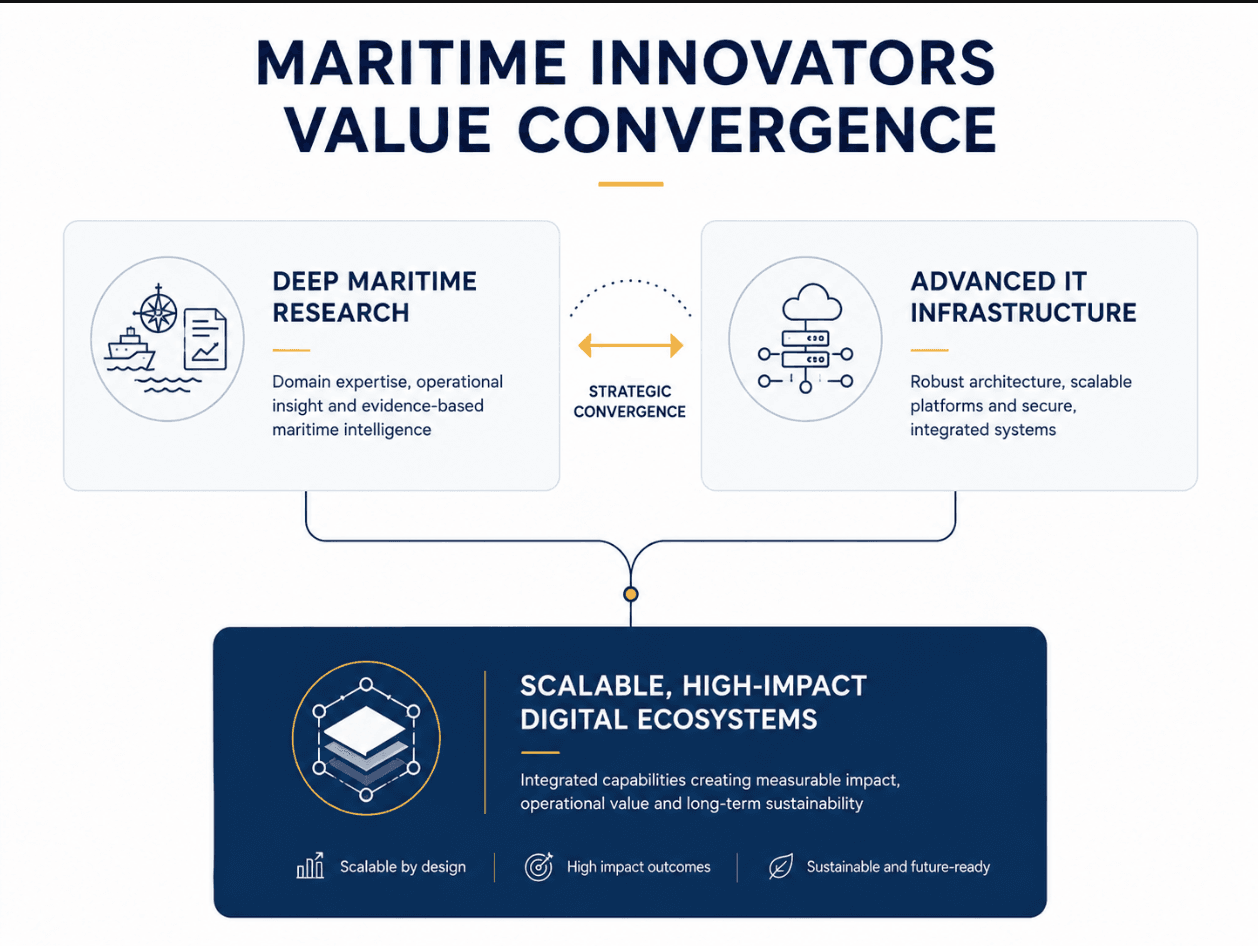
By intentionally bridging this gap, we possess the available structural resources to rapidly translate abstract regulatory matrices into intuitive, high-availability web architectures. For the SEA4SHORE initiative, this internal capacity allowed our development teams to work in lockstep with our esteemed coordinator, Riga Technical University (RTU), and our fellow European partners across Lithuania, Croatia, Greece, and Spain. Together, we built a responsive, multilingual engine that outperformed its baseline project targets.
Operational Performance Metrics and Strategic Impact
| Key Project Benchmark | Contractual Target | Final Delivered Output | Long-Term Market Impact |
| Structured Career Profiles | 120 Pathways | 125 Comprehensive Profiles | Deep mapping of technical, digital, and green-shipping corporate roles ashore. |
| Linguistic Integration | Core Regional Languages | 7 European Languages Covered | Democratized access across primary European maritime labor source countries. |
| Digital Engagement | Pilot Cohort Testing | 2,700+ Unique Visitors / 580+ Active Users | Proven, immediate market demand and rapid user onboarding ahead of schedule. |
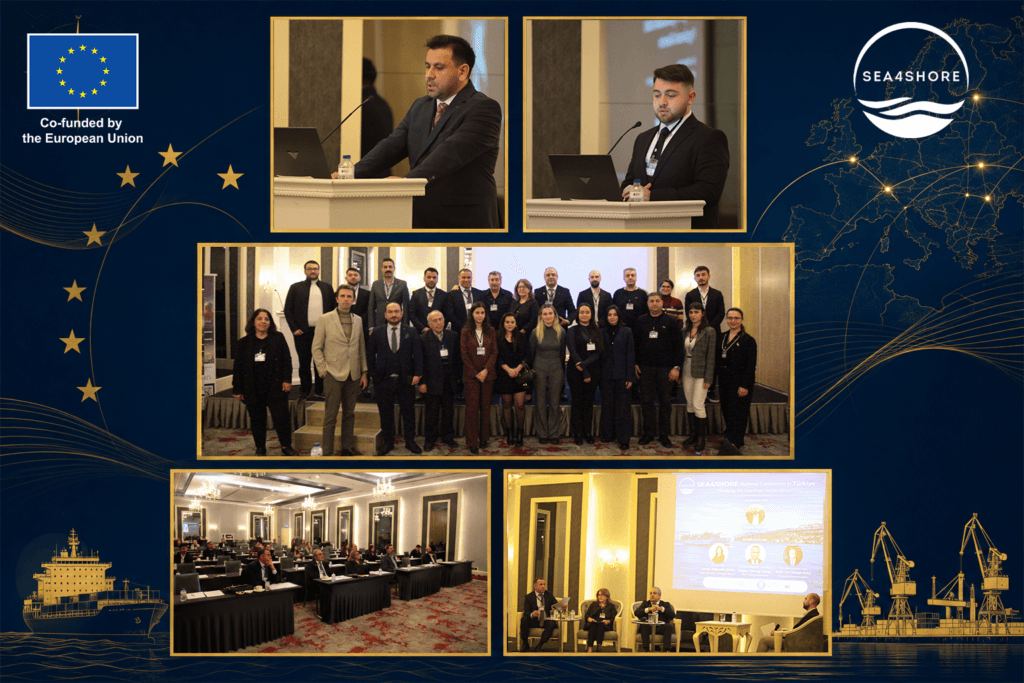
| Stakeholder Endorsement | Academic Dissemination | 6 Conferences / 367 Key Participants | Secured formal letters of opinion and market validation from ship management and unions. |
The EU Validation: Beyond Compliance to Best Practice
The evaluation score of 93 out of 100 points and the subsequent “Good Practice” designation from the European Union represent a major external validation of our development methodology. The European Commission reserves this status for initiatives that demonstrate exceptional European added value, flawless technical execution, and highly transferable real-world results.
A decisive factor in this recognition was our refusal to let SEA4SHORE become a purely academic exercise. Instead of delivering static theoretical reports, the consortium focused on commercial and regulatory validation. We actively stress-tested the 125 integrated career profiles against the operational requirements of international ship management lines, maritime trade unions, and vocational training institutes. By matching our technology directly to current industry needs, we created a tool that provides immediate utility to the market.
“Securing the ‘Good Practice’ designation from the European Union is a powerful validation of what can be accomplished when rigorous maritime research intersects with sophisticated IT architecture,” stated Ugurcan Acar, Founder and General Manager at MARITIME INNOVATORS. “Our objective was to strip away the administrative friction from seafarer career transitions. We are deeply grateful to Riga Technical University for their steadfast leadership and trust, and to all our partners for their tireless collaboration. This success serves as a definitive blueprint for how we will approach our future digital pipeline.”
The Strategic Agenda Ahead: Future-Proofing human capital
The success of SEA4SHORE is deeply intertwined with our forward-looking corporate agenda. As the maritime sector undergoes rapid digital and environmental shifts driven by decarbonization mandates, automated port ecosystems, and the integration of artificial intelligence, the skills required both at sea and on shore are changing at an exponential rate.
Moving forward, MARITIME INNOVATORS is leveraging the data models and software architecture developed during this project to fuel our broader portfolio of European and global initiatives, including Skills4Sea and PraC-MARENG Plus. Our future roadmap includes:
- AI-Driven Competency Mapping: Upgrading our self-assessment frameworks with predictive machine learning models to suggest customized upskilling pathways for seafarers entering highly automated onshore sectors.
- Expanding Digital E-Learning Ecosystems: Integrating our validated career profiles directly into interactive, cloud-based vocational training tools to minimize onboarding times for corporate maritime employers.
- Advancing Workforce Mobility Policies: Utilizing the data gathered from thousands of active users to advise international policy groups and maritime administrations on modern human resource retention strategies.
To guarantee the permanent sustainability of the SEA4SHORE initiative, the entire digital engine, database, and career mapping framework will remain completely free and publicly accessible. By hosting these resources permanently on the official Erasmus+ Project Results Dissemination Platform, we ensure that maritime professionals worldwide can continue to leverage this tool, protecting seafarer welfare and industry retention for years to come.
Key Takeaways
- Validating Innovation: Achieving a qualitative score of 93 out of 100 points and the EU’s “Good Practice Example” designation confirms the market readiness and structural integrity of the SEA4SHORE platform.
- Our Core Differentiator: The successful deployment of this open-access tool highlights MARITIME INNOVATORS’ unique position: combining intensive maritime research with advanced, in-house IT development infrastructure.
- Exceeding Expectations: The transnational consortium surpassed its strategic metrics, engineering 125 highly transferable career profiles translated across seven distinct languages.
- Strategic Continuity: The technological frameworks perfected during this initiative are directly linked to our future corporate roadmap, driving next-generation AI mapping, digital e-learning, and human capital sustainability across the global shipping sector.